When to Mulch in Western PA and How to Pick the Right Type for Your Yard

When to Mulch in Western PA and How to Pick the Right Type for Your Yard
Every spring the same question comes up: when should I mulch? The answer around here is simpler than most people think, but the timing does matter — and so does what you put down.
When to Mulch in Western PA
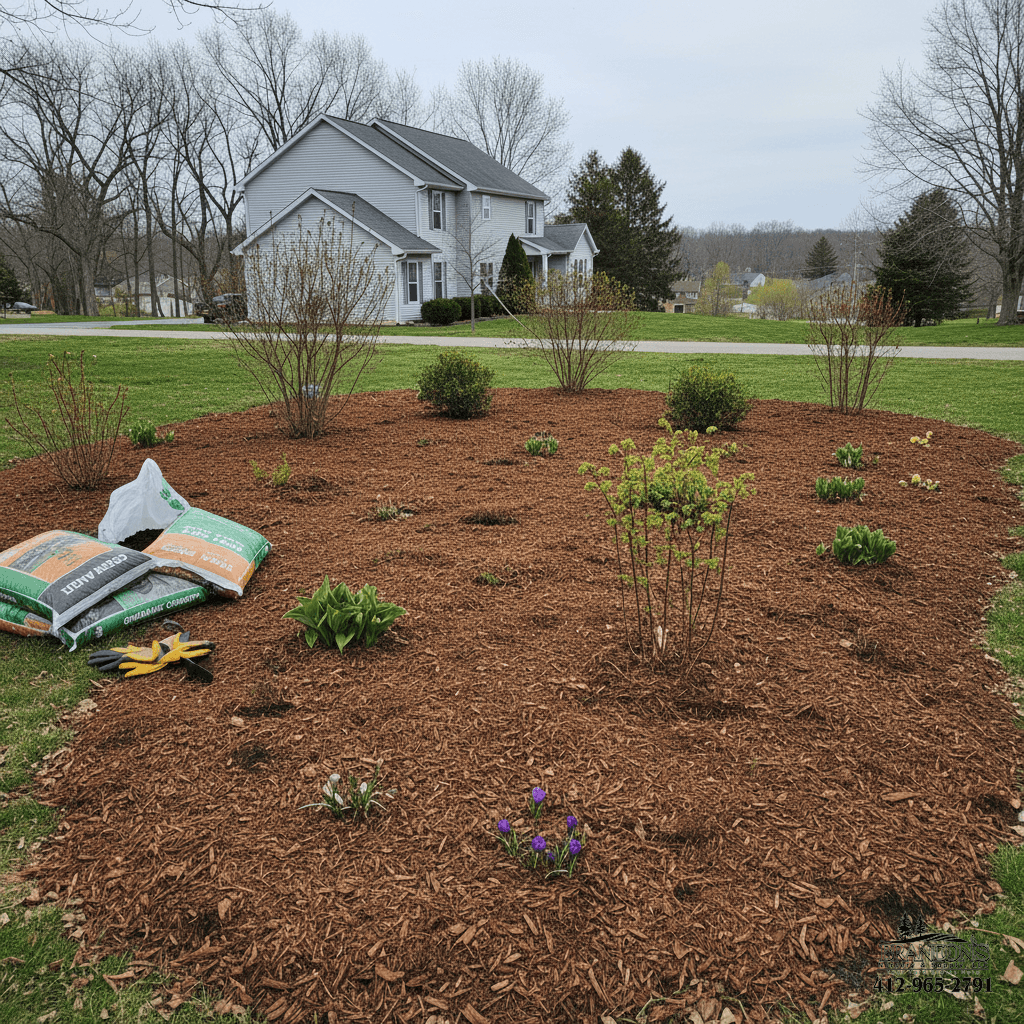
The short answer is mid-March through April. You want to wait until the ground has thawed and dried out enough that you're not walking through mud, but early enough that you get mulch down before weeds start taking off.
In a typical year around Pittsburgh and the surrounding counties, that window opens in mid to late March. If we've had a mild winter — like some recent years — you can start a little earlier. If the ground is still soggy and soft underfoot, give it another week.
There's no benefit to rushing it. Mulching over frozen or waterlogged soil traps moisture against plant crowns and can cause rot. Let the beds dry out and warm up first.
What About Fall Mulching?
Fall is the other good window, usually October into early November. A fall application insulates roots heading into winter and breaks down over the cold months, feeding the soil by spring. But spring is when most people mulch because that's when beds look their worst and weeds are about to explode.
How Much Mulch Do You Need?
The target is 2 to 3 inches of mulch over your beds. That's enough to suppress weeds and retain moisture without suffocating roots. If you already have last year's mulch partially broken down, you might only need an inch of fresh material on top.
Here's a quick reference:
- 1 cubic yard covers about 160 square feet at 2 inches deep
- 1 cubic yard covers about 108 square feet at 3 inches deep
Most homeowners underestimate how much they need. A typical ranch home with foundation beds on three sides and a couple of tree rings usually takes 3 to 5 yards. Larger properties with island beds and landscaped slopes can easily need 10 or more.
If you're not sure, measure your bed areas (length × width) and we can help you figure out the right amount. Better to have a little extra than to run short halfway through the job.
Types of Mulch and When to Use Each
Not all mulch is the same, and the right choice depends on where you're putting it and what you want it to do.
Hardwood Mulch
The workhorse. Hardwood mulch is made from shredded oak, maple, and other deciduous trees. It breaks down at a moderate pace, improves soil structure as it decomposes, and holds its position on slopes better than larger chips. This is what most people should be using on garden beds and around foundation plantings.
Dyed Mulch (Black, Brown, Red)
Dyed mulch is hardwood that's been color-treated. The color lasts longer than natural mulch — usually holding through most of the season before fading. It's popular for front yard beds and commercial properties where a uniform look matters. The dyes used today are iron oxide and carbon-based, and they're safe for plants and soil.
The tradeoff is that dyed mulch sometimes breaks down a little slower than natural, so it doesn't feed the soil quite as fast. But for curb appeal, it's hard to beat.
Double-Shredded Mulch
This is hardwood mulch that's been run through the grinder twice. The result is a finer, more uniform texture that lays flat and knits together well. It's great for beds you want to look clean and manicured, and it's less likely to wash out in heavy rain. If you're mulching slopes, double-shredded is a solid choice.
Wood Chips
Bigger pieces, slower to break down. Wood chips work well for paths, play areas, and around established trees where you want long-lasting coverage. They're not ideal for annual flower beds or vegetable gardens because they tie up nitrogen as they decompose, which can starve shallow-rooted plants.
Topsoil and Compost Blends
Not technically mulch, but worth mentioning. If your beds have poor soil — and a lot of Western PA yards are sitting on heavy clay — a layer of compost or a topsoil/compost blend worked into the top few inches does more for plant health than mulch alone. Mulch on top of good soil is the combination that really makes a difference.
Common Mulching Mistakes
A few things we see every spring that are worth avoiding:
Volcano mulching around trees. This is the cone of mulch piled up against the trunk that you see everywhere. It holds moisture against the bark, promotes disease, and attracts boring insects. Pull mulch back 3 to 4 inches from the trunk. You should be able to see the root flare — the point where the trunk widens into the roots at ground level.
Going too thick. More than 4 inches of mulch starts causing problems. It can prevent water from reaching roots, create a matted layer that repels water, and provide habitat for rodents. Two to three inches is the sweet spot.
Mulching over landscape fabric every year. Landscape fabric under mulch sounds like a good idea, but after a few years the mulch breaks down on top of the fabric, weeds root into that layer, and you've got a mess that's harder to maintain than bare soil with fresh mulch. If you're starting fresh, skip the fabric in planted beds.
Picking Up vs. Delivery
For a few yards of mulch, picking up with a truck or trailer is easy and cost-effective. We load you up and you're on your way. For larger jobs — anything over 4 or 5 yards — delivery saves you time and multiple trips.
We deliver bulk mulch, topsoil, and compost across the greater Pittsburgh area. Just give us a call or stop by the yard in Oakdale and we'll get you set up.
Ready to get your spring mulching done? Contact us for bulk pricing, delivery, or help figuring out how much you need.